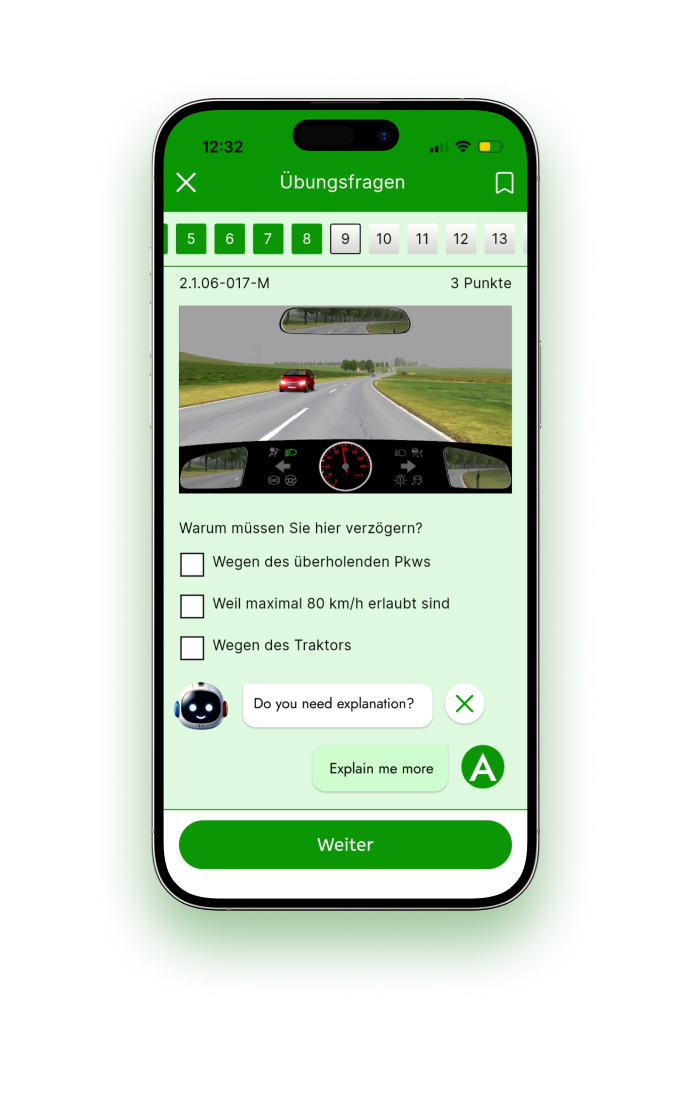
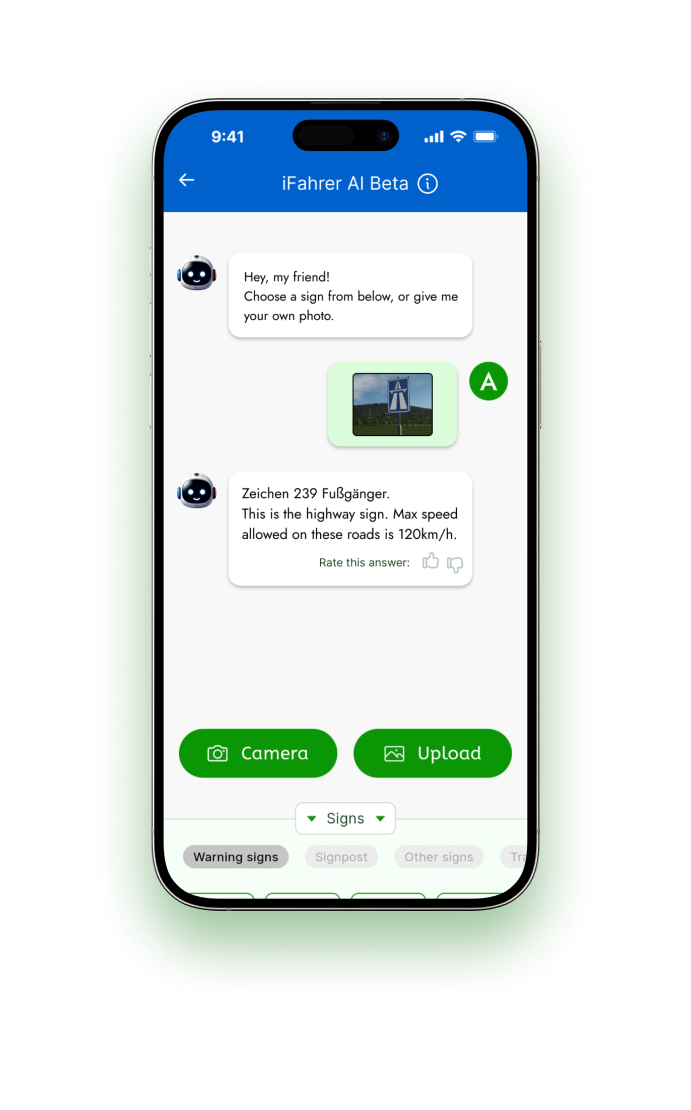
Get ready for your license test with AI assistance!
How does the effect of automatic load-dependent braking-force regulators (ALB) and automatic anti-locking devices (ABS) differ?
An anti-locking device (ABS) prevents the wheels from locking irrespective of the weight and the condition of the roadway
An automatic load-dependent braking-force regulator (ALB) automatically adjusts the braking force to the axle load
An automatic load-dependent braking-force regulator (ALB) automatically adjusts the braking force to the condition of the roadway
Here is Our AI Assistant's Explanation
You answered correctly. ABS, or anti-lock braking system, keeps the wheels from locking during braking, regardless of how much weight the vehicle is carrying or what the road conditions are. This helps maintain steering control. Meanwhile, an automatic load-dependent braking-force regulator (ALB) dynamically adjusts the braking force depending on how much load is on the axle, making sure heavy or lightly loaded vehicles brake effectively. ALB does not adjust for road conditions, only for vehicle load. Knowing the difference helps you understand how a vehicle’s braking system maintains safety under different loads and circumstances.